BIOGAS
Biogas - Powering the Renewable Energy Economy
Biogas, often termed as "green gas," is a renewable energy source derived from the natural breakdown of organic matter in the absence of oxygen. This process, known as anaerobic digestion, produces a mixture of methane and carbon dioxide, along with trace amounts of other gases.
In recent years, biogas has gained significant traction as a sustainable alternative to fossil fuels, offering a myriad of environmental and economic benefits. As a clean and renewable energy source, biogas plays a crucial role in reducing greenhouse gas emissions, mitigating climate change, and promoting a circular economy by converting organic waste into valuable energy.
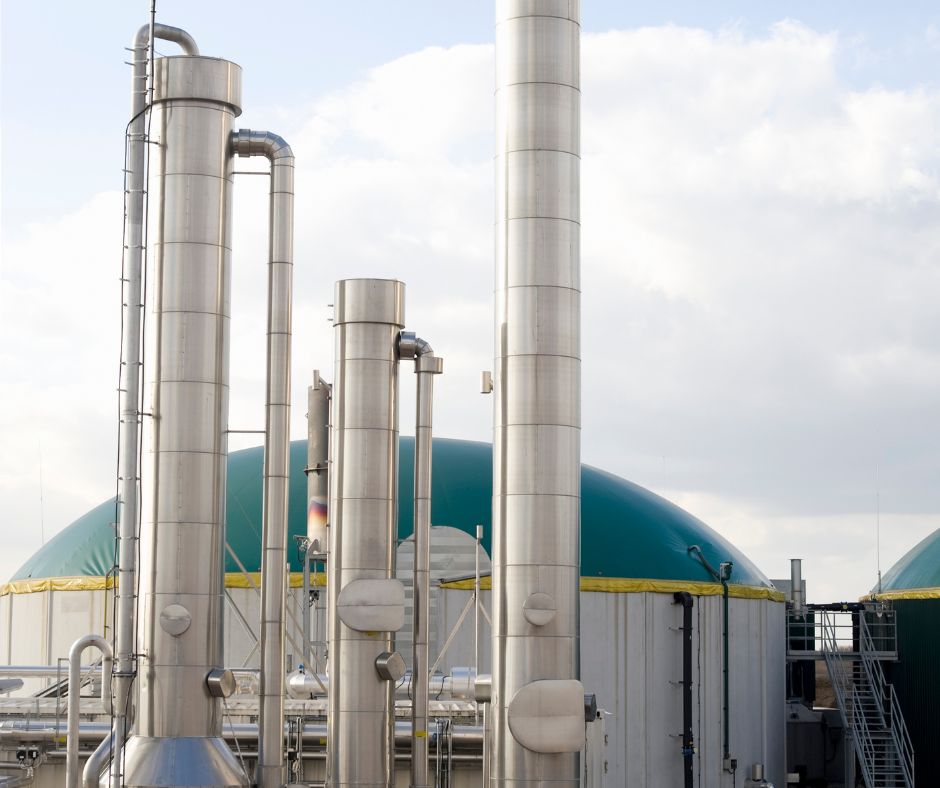
Organic Waste Collection Area
In this initial stage of the process, vehicles or trucks transport segregated organic waste into the waste reception and segregation area. Here, trained personnel manually separate organic from inorganic materials, ensuring that only suitable organic substrates are used for the production of biogas.
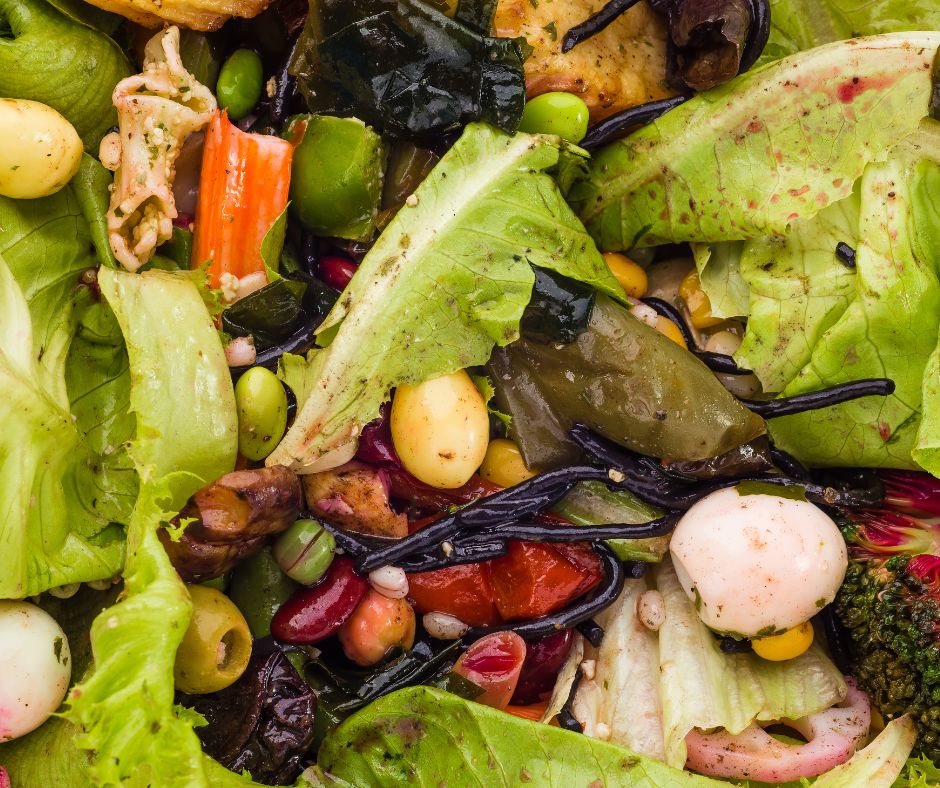
Secondary Segregation
Following the initial segregation process, the waste undergoes further sorting on stainless steel tables, where any remaining inorganic materials are removed. This meticulous secondary segregation ensures that the organic waste selected for biogas production is of the highest quality.
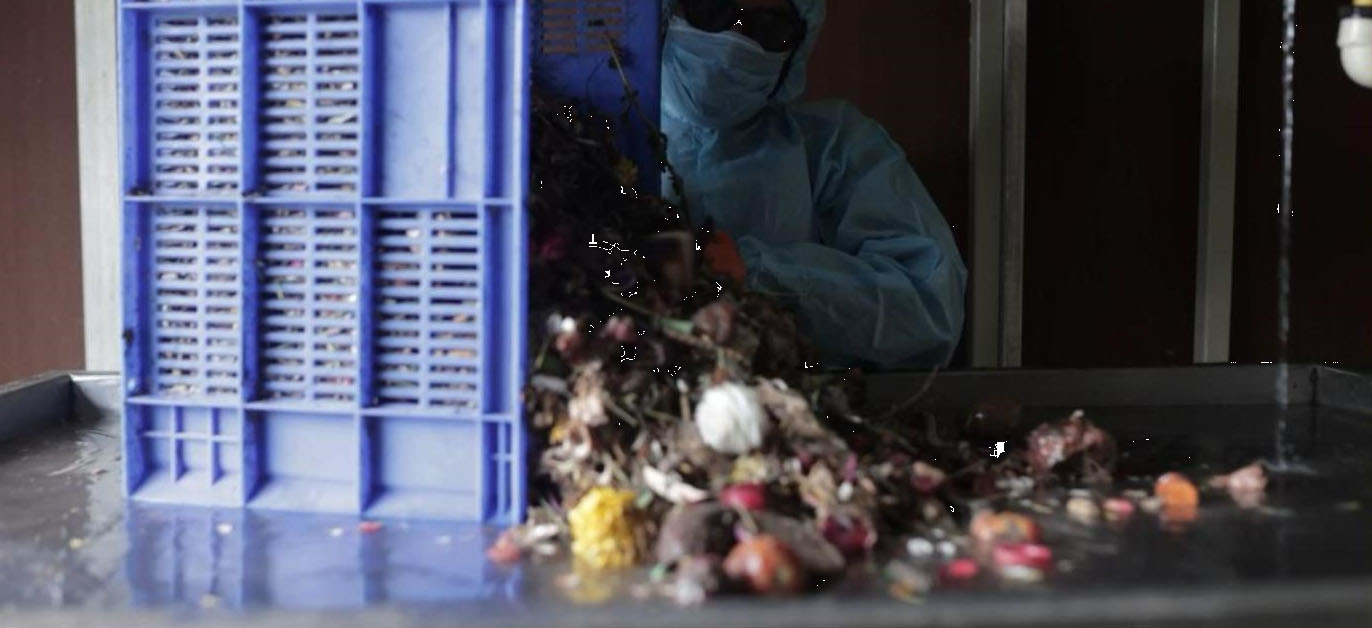
Crusher
The segregated biodegradable food waste is then passed through a crusher, where it is finely crushed to increase its surface area. This preprocessing step accelerates the degradation of organic matter during anaerobic digestion, optimizing biogas production efficiency.
Pumping
The crushed food waste is mixed with water to form a slurry, which is then pumped into the main digestion process. This slurry serves as the feedstock for the anaerobic digestion machine, where microbial action converts organic matter into biogas.
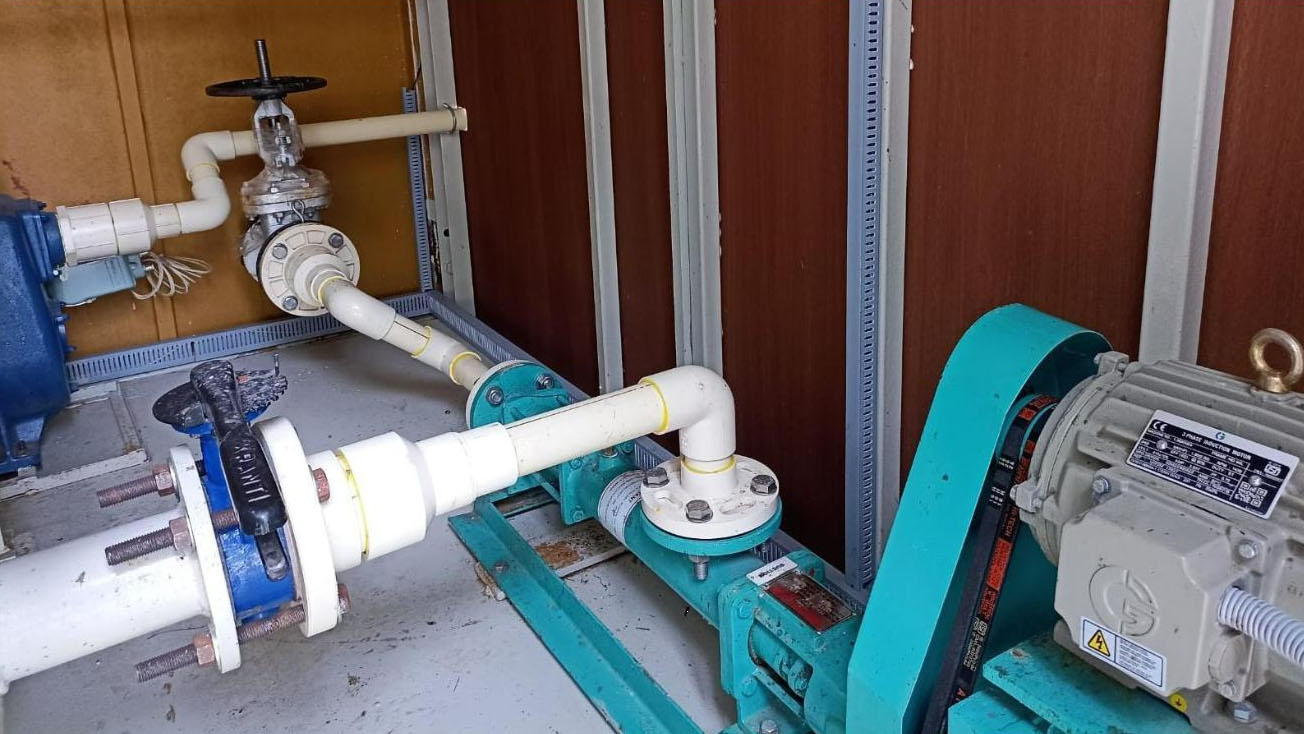
Anaerobic Digestion process
In the anaerobic digestion process, biological degradation of the substrates occurs in the absence of oxygen. Maintained at an optimal temperature of 40°C and subjected to continuous mixing, this process facilitates the conversion of dissolved organic matter into biogas. The three stages of anaerobic digestion—hydrolysis, acidogenesis, and methanogenesis—work synergistically to produce methane-rich biogas.
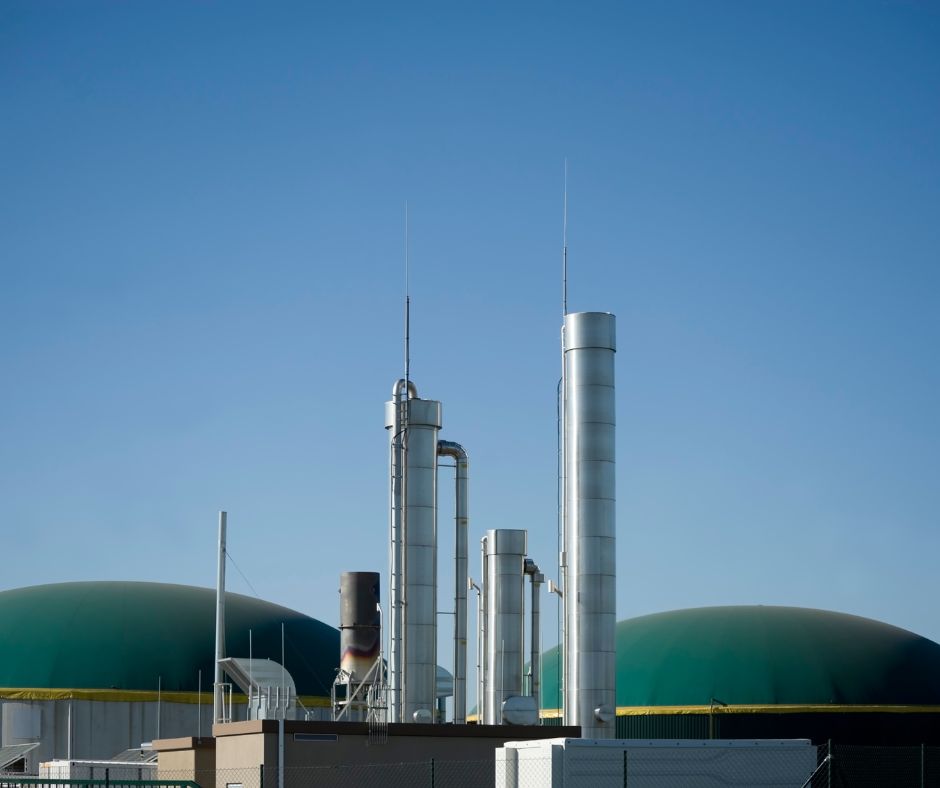
Digestate Tank/Liquid Fertilizer
The digested slurry generated from the anaerobic digestion process is a nutrient-rich substance that can be used as a liquid fertilizer. This organic biofertilizer enhances soil fertility and promotes sustainable agriculture practices. Additionally, the separated water from the slurry can be recycled for subsequent processing operations, minimizing water consumption and waste generation.
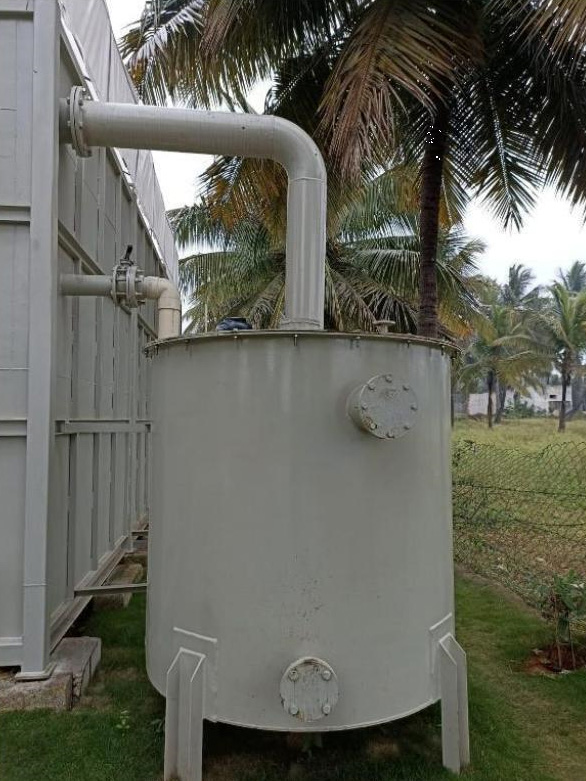
Moisture Trap
Water condenses in every biogas line and it is critical that this water is bled out of the system without gas loss. This is the function of the line Moisture Trap and easily incorporated into the pipe work. When gas enter the Moisture Trap, it impinges upon the special created surface with flow reversals, this causes coalescence resulting conversion of moisture into water droplets which in turn falls into the base of Moisture Trap. It has mechanical auto-drain system (optional) which drains out the water as it crosses a certain level in the tank.
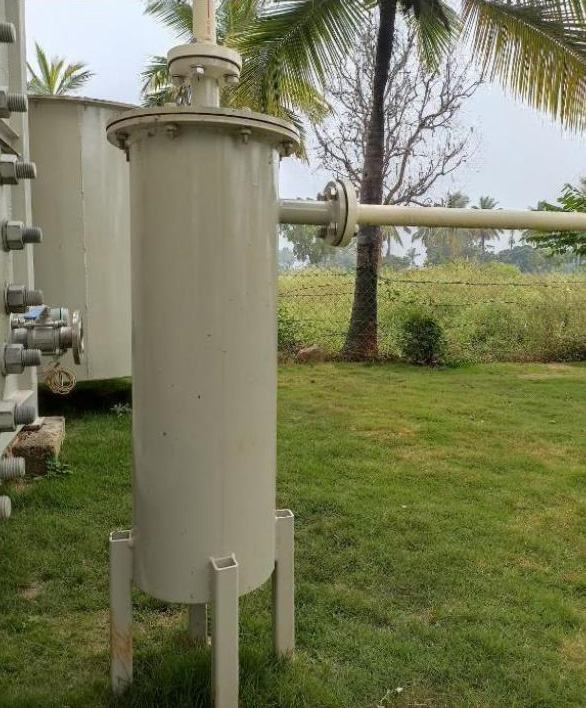
H2S Scrubber
Raw biogas produced by digestion during an anaerobic process is approximately 60% methane. When the gas produced is to be used for cooking then it is necessary to upgrade biogas in order to burn it safely then you first need to remove the hydrogen sulfide. Scrubbing upgrades, it to bio methane. This can then be used as a substitute for natural gas.
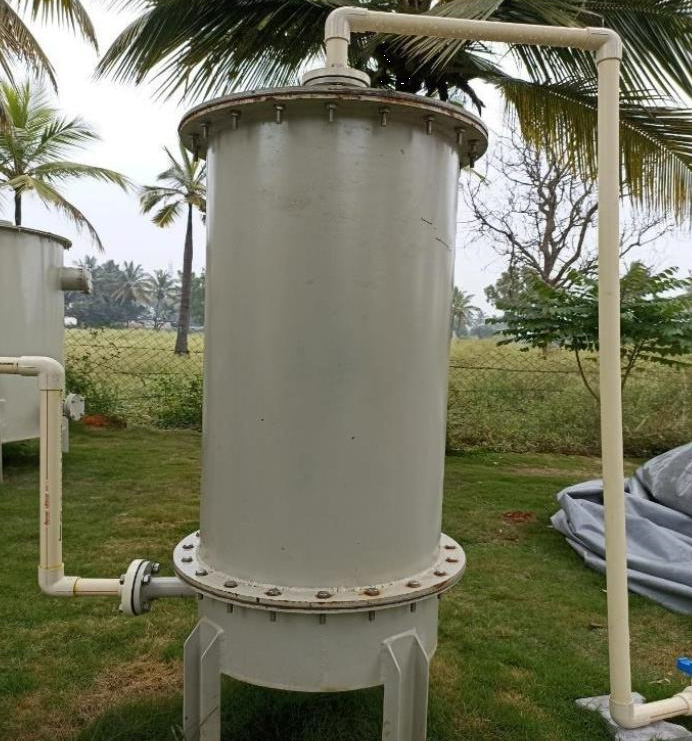
Compressor
A gas compressor is a mechanical device that increases the pressure of a gas by reducing its volume. Compression of a gas naturally increases its temperature. The advantages of gas compressors are that a higher amount of gas flow can flow in the pipeline and energy losses are lower due to the increase in pressure
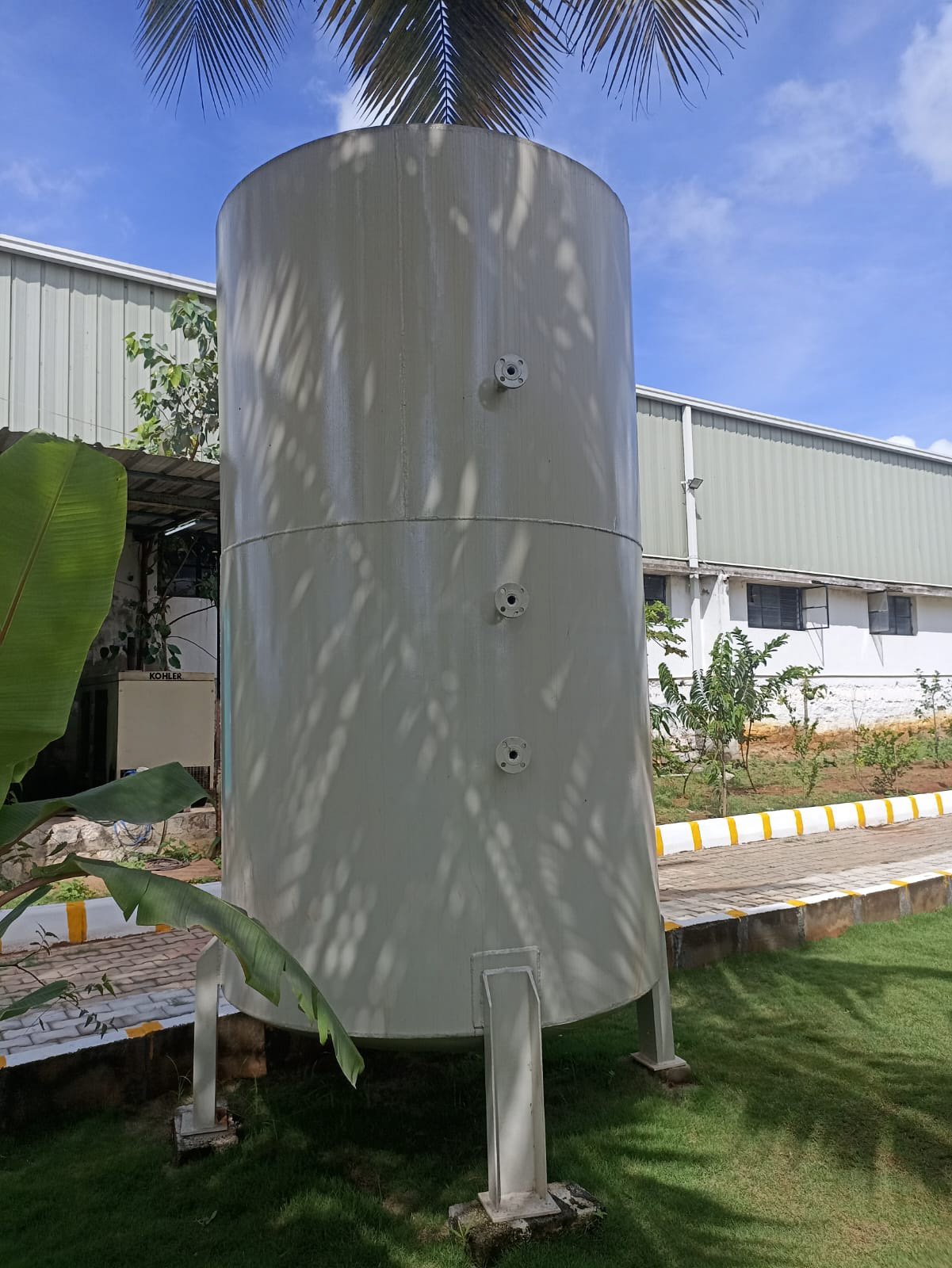
Gas receiver tank
The gas receiver tank serves as a vital component of our biogas systems, providing storage capacity and pressure regulation for the distribution network. This ensures a reliable and continuous supply of biogas to end-users, supporting their energy needs while reducing dependence on conventional fossil fuels.
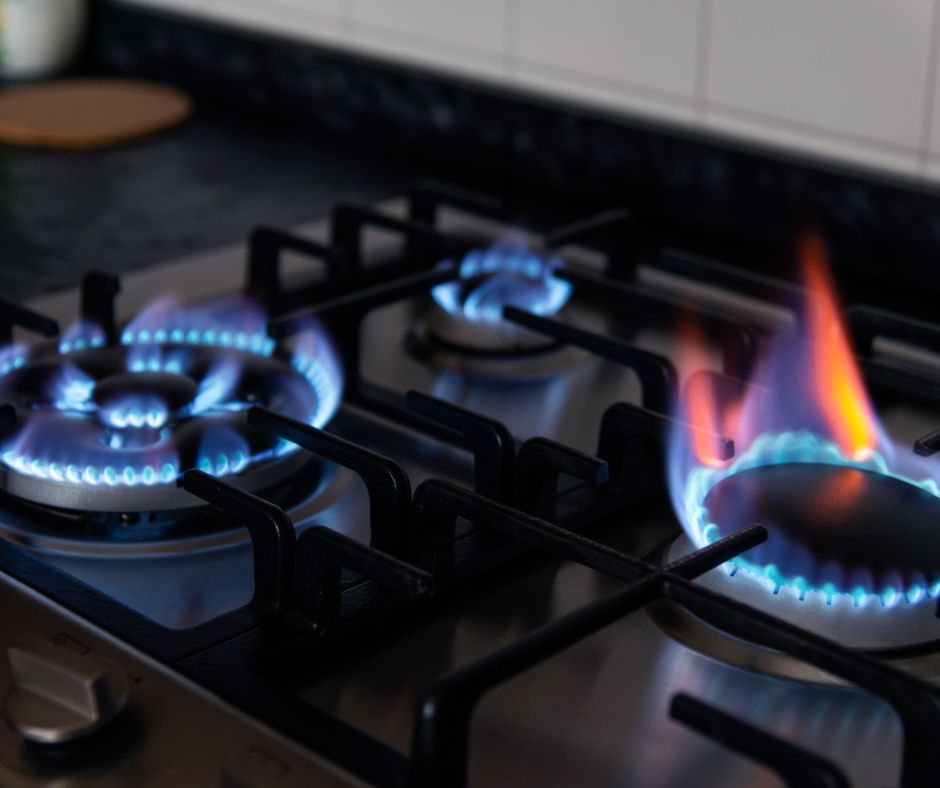
Gas Stove
By installing a biogas stove, you can cook your meals using clean, renewable biogas instead of relying on traditional fossil fuels. Not only does this reduce your environmental impact, but it also eliminates the need for costly fuel purchases. Our biogas stoves are designed for efficiency and convenience, providing reliable performance while minimizing emissions.
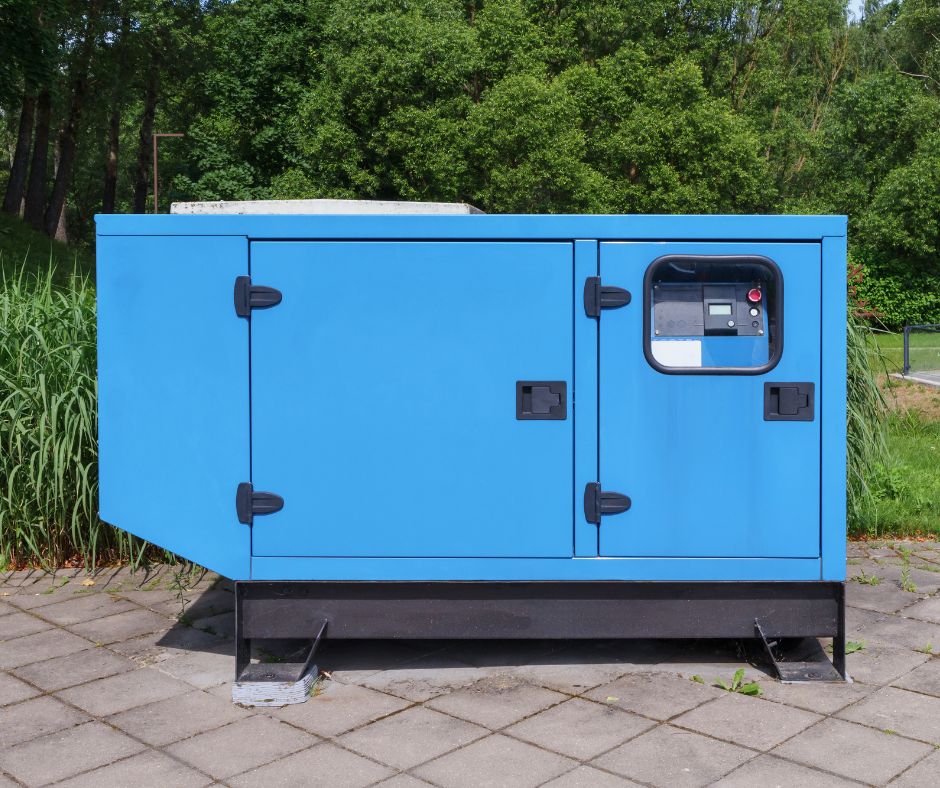
Gas Generator
By connecting the gas tank to a biogas generator, you can generate electricity for lighting, appliances, and other electrical devices on your property. Our generators are designed to seamlessly integrate with our biogas systems, providing a continuous supply of clean energy whenever you need it.
FAQ's
Connect With Us
We're always eager to discuss our services, learn about your manufacturing needs, or explore partnership opportunities. Contact us today!